Corporate Social Responsibility (CSR) in India has evolved into a powerful mechanism for inclusive growth and social transformation. Since the introduction of mandatory CSR provisions under the Companies Act, 2013, leading corporations have significantly expanded their role in addressing critical social challenges such as education, healthcare, skill development, rural infrastructure, environmental sustainability, and community welfare.
The financial year 2023–24 witnessed substantial CSR contributions from companies across diverse sectors including banking, energy, manufacturing, information technology, finance, mining, and infrastructure. These organizations are not only complying with regulatory mandates but are also creating long-term social impact by strategically investing in communities.
The CSR landscape in India today reflects a growing commitment by corporations to integrate social responsibility into their core business philosophy. From large conglomerates to public sector undertakings and technology giants, several companies have emerged as key contributors to national development through impactful CSR initiatives.
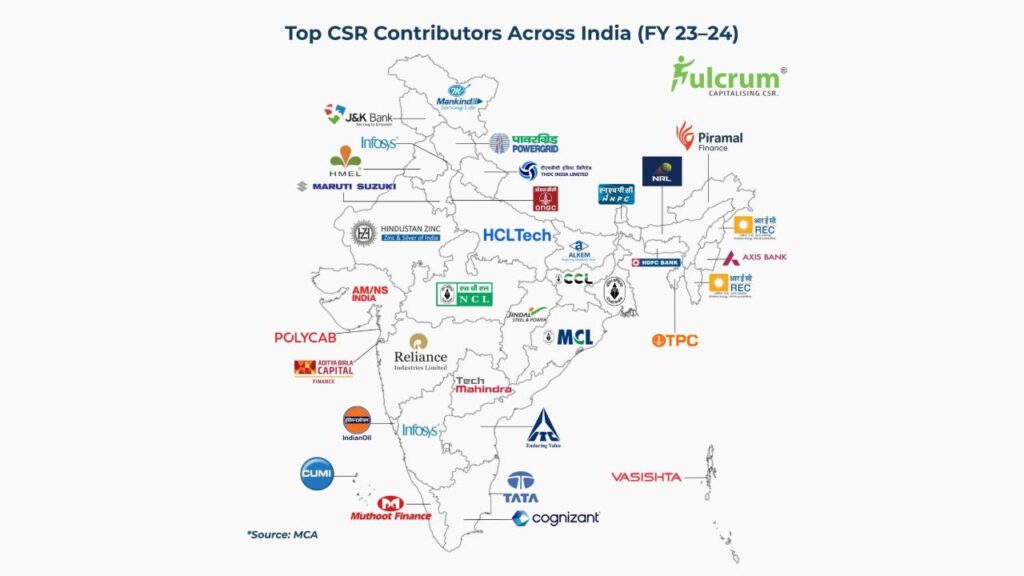
This blog highlights some of the top CSR contributors across India in FY 2023–24, their sectors, and the transformative impact they are creating across the country.
The Growing Importance of CSR in India
India is one of the first countries in the world to mandate CSR spending through legislation. Companies meeting certain financial thresholds are required to allocate at least 2% of their average net profits toward CSR activities.
This regulatory framework has transformed CSR from a philanthropic activity into a structured approach toward social development. As a result, thousands of crores are now invested annually in areas aligned with national priorities such as:
- Education and digital literacy
- Healthcare and nutrition
- Skill development and livelihood
- Rural development
- Environmental sustainability
- Women empowerment
- Sports promotion and community infrastructure
Corporate CSR initiatives are now increasingly aligned with Sustainable Development Goals (SDGs) and government flagship programs, ensuring that investments create measurable and long-lasting impact.
Leading Corporate CSR Contributors in FY 2023–24
1. Energy and Natural Resources Sector
The energy sector continues to be among the largest contributors to CSR spending due to its strong presence in rural and industrial regions.
Companies such as ONGC, Indian Oil, Power Grid Corporation, NHPC, THDC India Limited, REC Limited, Jindal Steel & Power, NCL, CCL, and MCL have implemented large-scale CSR projects across India.
These initiatives primarily focus on:
- Rural infrastructure development
- Electrification and renewable energy
- Healthcare services in remote areas
- Skill training for local youth
- Environmental conservation and afforestation
Public sector undertakings in the coal and power sectors have also played a significant role in improving the quality of life in mining and surrounding communities.
2. Information Technology and Technology Sector
India’s technology companies have been at the forefront of innovation-driven CSR programs.
Major contributors include:
- Infosys
- HCLTech
- Tech Mahindra
- Cognizant
These companies have focused heavily on education, digital inclusion, and skill development, particularly in emerging technologies.
Key initiatives include:
- Digital learning platforms for rural schools
- STEM education programs
- Scholarships for underprivileged students
- Digital literacy for women and senior citizens
- Innovation labs in educational institutions
Technology companies are increasingly leveraging their expertise to create scalable solutions that address social challenges through digital transformation.
3. Banking and Financial Services Sector
The banking and financial services sector has also demonstrated strong commitment toward CSR-led social development.
Leading contributors include:
- HDFC Bank
- Axis Bank
- Piramal Finance
- Aditya Birla Capital
- J&K Bank
- Muthoot Finance
CSR initiatives in this sector typically focus on:
- Financial literacy and inclusion
- Entrepreneurship development
- Healthcare programs
- Water conservation projects
- Support for micro and small enterprises
- Women-led self-help groups
Many financial institutions are also supporting livelihood generation programs that empower rural communities and promote sustainable economic growth.
4. Manufacturing and Industrial Sector
India’s manufacturing sector has a long-standing tradition of community engagement and CSR investments.
Key companies contributing significantly include:
- Tata Group
- Reliance Industries Limited
- Maruti Suzuki
- Hindustan Zinc
- AM/NS India
- Polycab
- ITC Limited
- Alkem Laboratories
These organizations have implemented diverse CSR initiatives covering:
- Education infrastructure and scholarships
- Public health interventions
- Sanitation and drinking water facilities
- Rural livelihood programs
- Agricultural development
- Skill development centers
Companies like Tata and Reliance have historically played a transformative role in building social infrastructure across India.
Geographic Spread of CSR Initiatives
CSR investments are increasingly being distributed across multiple regions of India to ensure balanced development.
Major CSR activities are concentrated in states such as:
- Maharashtra
- Gujarat
- Karnataka
- Tamil Nadu
- Odisha
- Jharkhand
- Rajasthan
- Uttar Pradesh
- Assam
- Jammu & Kashmir
These regions benefit from large-scale projects in education, healthcare, nutrition, skill training, and community infrastructure.
Companies are also prioritizing aspirational districts and rural areas, ensuring that CSR initiatives reach underserved populations.
Emerging Trends in CSR
The CSR ecosystem in India is undergoing significant transformation. Several key trends are shaping the future of corporate social responsibility.
1. Strategic CSR Investments
Companies are moving away from fragmented activities toward strategic and long-term CSR programs aligned with national development priorities.
2. Impact Measurement and Evaluation
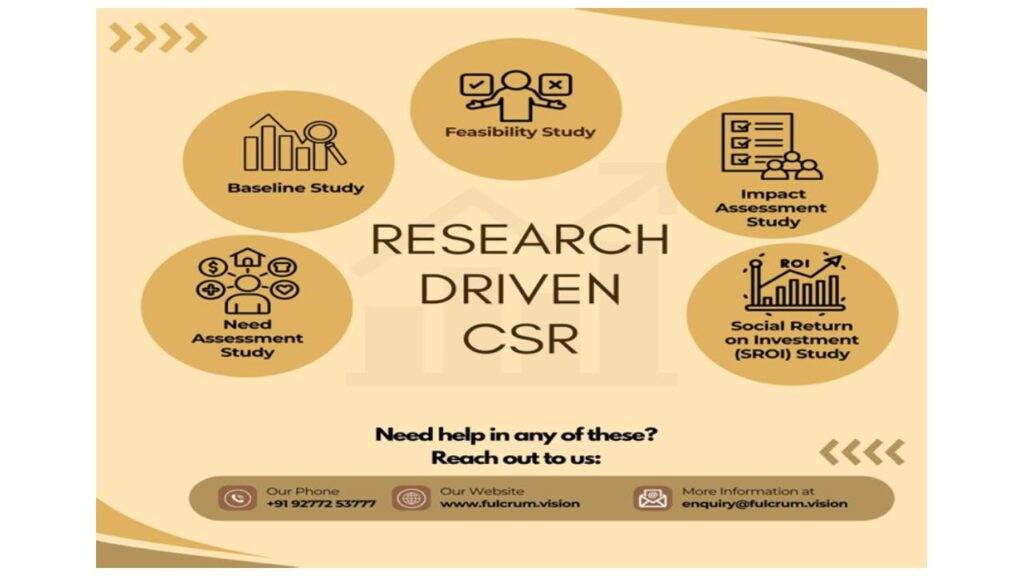
Organizations are increasingly focusing on impact assessment and social return on investment (SROI) to measure the effectiveness of CSR initiatives.
Impact-driven CSR ensures that investments create tangible improvements in community well-being.
3. Collaboration with NGOs and Social Enterprises
Corporations are partnering with experienced NGOs and implementation agencies to ensure effective program execution and community engagement.
4. Technology-enabled Social Programs
Digital platforms, data analytics, and artificial intelligence are being used to improve program monitoring, beneficiary outreach, and impact measurement.
5. Sustainability and Climate Action
Environmental sustainability has become a major focus area, with companies investing in:
- Renewable energy
- Water conservation
- Waste management
- Climate resilience programs
Role of CSR Consulting and Impact Assessment
As CSR spending increases, companies are increasingly seeking professional support for CSR strategy development, project implementation, monitoring, and impact assessment.
Specialized CSR consulting organizations help companies:
- Identify high-impact social projects
- Conduct need assessment studies
- Develop CSR strategy aligned with business goals
- Implement programs through credible partners
- Conduct third-party impact assessments
- Ensure regulatory compliance and reporting
Effective CSR management ensures that corporate investments translate into measurable social outcomes.
The Road Ahead for CSR in India
India’s CSR ecosystem is poised for significant growth in the coming years. With increasing corporate participation and stronger regulatory oversight, CSR investments will continue to play a critical role in addressing socio-economic challenges.
The future of CSR in India will likely focus on:
- Scalable and sustainable development models
- Public-private partnerships
- Evidence-based program design
- Community ownership and participation
- Integration with ESG (Environmental, Social, Governance) frameworks
By adopting innovative and strategic CSR approaches, companies can contribute meaningfully to India’s vision of inclusive and sustainable development.
Conclusion
The top CSR contributors across India in FY 2023–24 demonstrate the growing commitment of corporations toward nation-building and social development. Through investments in education, healthcare, environment, livelihood, and infrastructure, these organizations are creating positive and lasting change across communities.
CSR today is no longer limited to philanthropy—it has become a strategic driver of sustainable development. As companies continue to expand their social impact initiatives, the collaboration between corporations, governments, NGOs, and communities will remain essential for building a more equitable and resilient society.
The journey of CSR in India reflects a powerful narrative: when businesses align profit with purpose, they become catalysts for transformative change.
https://www.linkedin.com/feed/update/urn:li:activity:7396773349315579904