Introduction
In the world of CSR, development consulting, and social impact projects, success depends on more than just good intentions—it requires structured planning, clear strategy, and measurable outcomes.
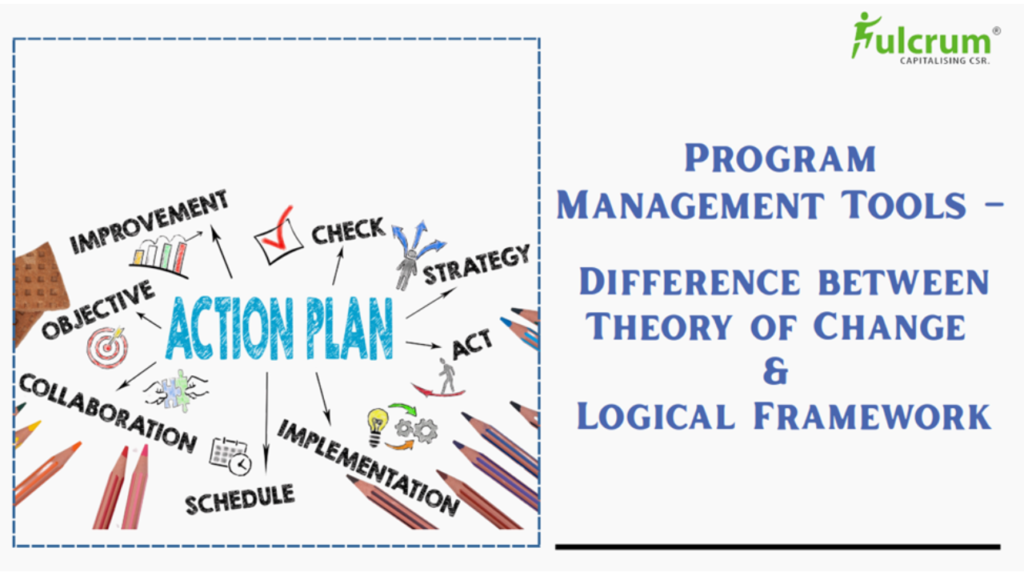
Two of the most widely used program management tools are Theory of Change (ToC) and the Logical Framework (Log Frame). As highlighted in the document, both tools are essential for designing, implementing, and evaluating impact-driven initiatives.
While they are often used together, they serve very different purposes. Understanding their differences is critical for building effective and scalable CSR programs.
What is Theory of Change (ToC)?
The Theory of Change is a strategic framework that explains how and why a desired change is expected to happen.
Key Elements of Theory of Change:
- Problem identification
- Long-term vision and goals
- Assumptions and external factors
- Stakeholder and partner mapping
- Pathways of change
Why ToC Matters:
- Provides a big-picture understanding of impact
- Helps identify risks and assumptions
- Aligns stakeholders around a shared vision
- Strengthens strategic planning
In simple terms, Theory of Change is your roadmap for impact.
What is a Logical Framework (Log Frame)?
The Logical Framework is a structured tool used for planning, monitoring, and evaluating projects.
Measurable components such as:
- Inputs (resources)
- Outputs (deliverables)
- Outcomes (short-term results)
- Impact/Goal (long-term change)
Each level includes:
- Indicators
- Means of verification
- Assumptions
Why Log Frame Matters:
- Ensures clarity and accountability
- Enables performance tracking
- Supports monitoring and evaluation (M&E)
- Simplifies reporting for stakeholders
In essence, Log Frame is your execution and measurement toolkit.
Theory of Change vs Logical Framework: Key Differences
Understanding the distinction between these two tools is crucial for effective program design.
1. Focus
- Theory of Change: Explains how change happens (big picture)
- Logical Framework: Defines what the project will do (specific actions)
2. Scope
- ToC: Broad, strategic, and process-oriented
- Log Frame: Structured, concise, and activity-focused
3. Purpose
- ToC: Planning, understanding change pathways, and evaluation
- Log Frame: Planning, monitoring, evaluation, and accountability
4. Complexity
- ToC: More complex, includes multiple factors and assumptions
- Log Frame: Simpler, focuses on direct cause-effect relationships
Why You Need Both Tools in CSR Projects
Rather than choosing between them, the most effective approach is to use both tools together.
Start with the “Why” (Theory of Change) and then move to the “How” (Logical Framework).
Combined Benefits:
- Strategic clarity + operational efficiency
- Better alignment between vision and execution
- Improved monitoring and impact measurement
- Stronger stakeholder communication
Practical Application in CSR and Development Projects
For organizations working in CSR or social impact:
Use Theory of Change to:
- Design long-term impact strategies
- Identify key assumptions and risks
- Engage stakeholders effectively
Use Logical Framework to:
- Plan project activities and timelines
- Track progress using indicators
- Measure outcomes and report impact
This integrated approach ensures that projects are both meaningful and measurable.
Fulcrum’s Perspective: From Clarity to Action
At Fulcrum, we believe that successful CSR initiatives require a balance between vision and execution.
Theory of Change + Logical Framework = Clarity + Action
By combining strategic thinking with structured implementation, organizations can:
- Maximize social impact
- Improve program efficiency
- Deliver measurable and sustainable outcomes
Conclusion
In today’s impact-driven ecosystem, using the right tools can make the difference between a well-intentioned project and a truly transformative one.
- Theory of Change helps you understand why change happens
- Logical Framework helps you execute how change happens
Together, they form a powerful foundation for designing, implementing, and scaling successful CSR and development programs
https://www.linkedin.com/feed/update/urn:li:activity:7340282477409644546