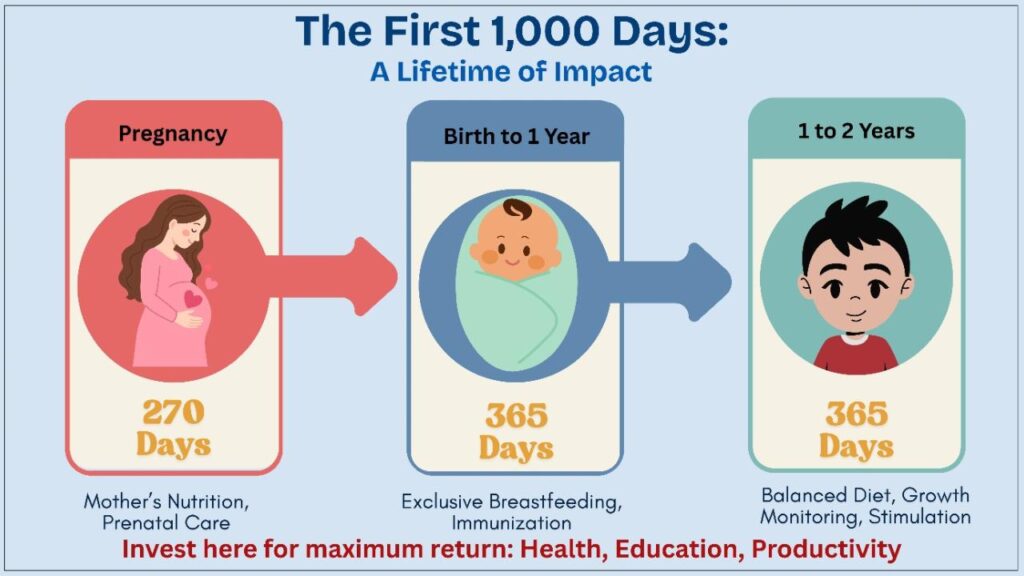
The first 1,000 days of life — from conception to a child’s second birthday — represent the most critical window for human development. During this period, a child’s body and brain grow at an extraordinary pace, laying the foundation for lifelong health, learning ability, and productivity.
Scientific research indicates that over 80% of a child’s brain development occurs within these first 1,000 days. Proper nutrition during this time fuels rapid brain growth, strengthens immunity, and supports healthy physical development. Conversely, inadequate nutrition during this crucial phase can cause irreversible damage — including stunted growth, impaired cognitive development, and reduced educational and income potential later in life.
Addressing nutrition during the first 1,000 days is therefore not just a public health priority; it is a strategic investment in human capital development and national economic growth.
Why the First 1,000 Days Are Critical
Nutrition during early life has a profound impact on a child’s ability to grow, learn, and thrive. Several global studies highlight why this period is considered the most important stage for intervention.
First, the human brain develops faster during the first two years of life than at any other time. Proper nutrition supports the development of neural connections that influence learning, memory, and emotional regulation.
Second, adequate maternal and child nutrition significantly reduces child mortality and disease risk. Well-nourished children are more resilient to infections and illnesses.
Third, early nutrition builds the cognitive and behavioral foundations necessary for education. Children who receive proper nutrition during early childhood perform better in school and demonstrate improved concentration and learning ability.
Perhaps most importantly, investing in early childhood nutrition helps break the intergenerational cycle of poverty. Healthy children grow into healthier, more productive adults who are better equipped to contribute to the economy and society.
The economic benefits are also significant. According to research by the World Bank, every ₹83 invested in early nutrition interventions can generate up to ₹1,328 in long-term benefits, including improved productivity, reduced healthcare costs, and increased economic output.
CSR Investments in Nutrition: Progress and Opportunity
Since the implementation of the Companies Act, 2013, Corporate Social Responsibility (CSR) has emerged as a powerful mechanism for addressing key social challenges in India. Corporates across sectors have collectively invested approximately ₹2.20 lakh crore in CSR initiatives, with ₹11,136 crore directed towards addressing poverty, hunger, and malnutrition.
In the financial year 2023–24 alone, around ₹1,234 crore was allocated to initiatives targeting hunger and nutrition.
These investments demonstrate growing corporate awareness of the importance of nutrition and public health. However, only a limited portion of CSR funding is currently directed toward programs that specifically address nutrition during the first 1,000 days — the stage where interventions produce the highest lifelong returns.
This gap presents a powerful opportunity for companies to create deeper and more sustainable impact.
Unlocking Impact Through Targeted CSR Programs
The increasing allocation of CSR funds toward health and nutrition is an encouraging trend. However, to maximize impact, CSR initiatives must focus on evidence-based, early-life nutrition programs that support mothers, infants, and young children.
Strategic CSR interventions during the first 1,000 days can include maternal nutrition support, breastfeeding awareness, complementary feeding programs, community health education, and partnerships with frontline health workers.
Such initiatives contribute directly to multiple Sustainable Development Goals (SDGs), including:
- No Poverty (SDG 1)
- Zero Hunger (SDG 2)
- Good Health and Well-being (SDG 3)
- Reduced Inequalities (SDG 10)
By aligning CSR programs with these global development goals, companies can create measurable social impact while strengthening their commitment to sustainable development.
Reimagining CSR as Strategic Nation-Building
Corporate Social Responsibility is no longer limited to philanthropy. Today, it represents a strategic tool for nation-building and long-term societal transformation.
Investing in nutrition during the first 1,000 days is one of the most powerful ways to unlock India’s demographic dividend. When children receive the nutrition they need during early development, they grow into healthier individuals who learn better, work more productively, and contribute meaningfully to the economy.
At Fulcrum – Capitalising CSR, we believe that impactful CSR begins with evidence-based program design and a focus on measurable outcomes. By partnering with corporates to design and implement targeted nutrition initiatives, we aim to support communities while strengthening India’s most valuable asset — its people.
Because the future of a nation is shaped long before a child enters school. It begins in the very first 1,000 days of life.
https://www.linkedin.com/feed/update/urn:li:activity:7340951404255006721