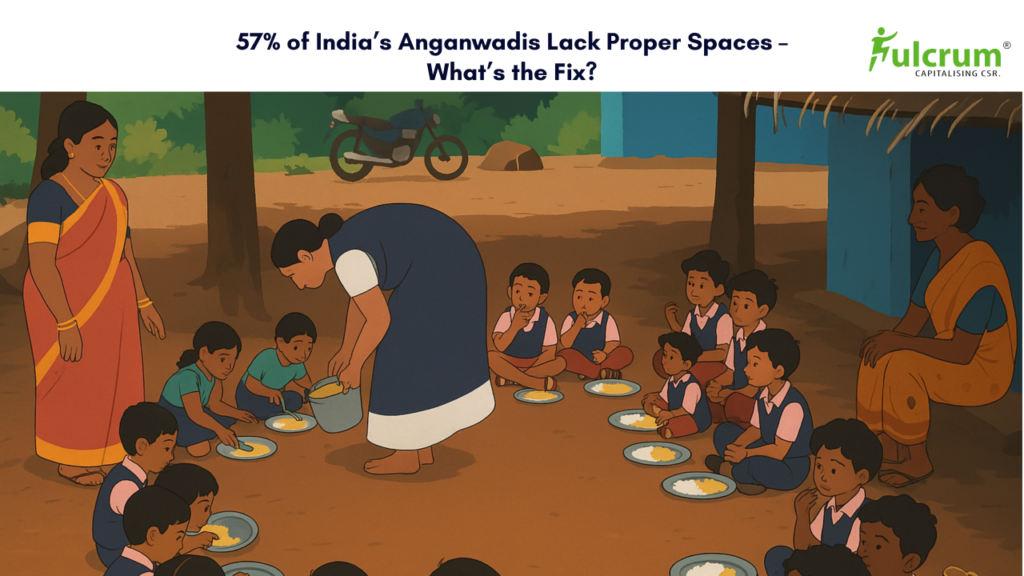
India’s early childhood development ecosystem relies heavily on the Integrated Child Development Services (ICDS) scheme, one of the world’s largest programs dedicated to maternal and child welfare. Through the network of Anganwadi Centers (AWCs), the scheme provides critical services such as nutrition, healthcare, and preschool education to millions of children, adolescent girls, and mothers across the country.
However, despite the scale and importance of the program, India is currently facing a significant Anganwadi infrastructure gap. A large proportion of Anganwadi centers still operate without proper infrastructure, limiting their ability to deliver essential services effectively. Addressing this gap presents not only a governance challenge but also a major opportunity for corporate CSR investments in early childhood development.
The Role of Anganwadi Centers in India’s Development
Anganwadi Centers are the grassroots implementation units of the ICDS scheme. They function as the first point of contact between the government’s welfare system and vulnerable communities, particularly in rural and underserved areas.
These centers provide a wide range of essential services including:
- Nutrition support for children aged 0–6 years
- Health and nutrition education for women aged 15–45 years
- Preschool education for children aged 3–6 years
- Growth monitoring and immunization for children
- Antenatal and postnatal care support for mothers
By addressing malnutrition, improving maternal health, and promoting early childhood learning, Anganwadis play a crucial role in strengthening India’s human capital and long-term economic development.
The Anganwadi Infrastructure Gap in India
Despite the importance of Anganwadi centers, infrastructure challenges continue to hinder their effectiveness.
India currently has over 13.72 lakh operational Anganwadi Centers across the country. However, according to the NITI Aayog Evaluation of the ICDS Scheme, only 43% of these centers operate from dedicated government spaces, while the remaining 57% function from rented or temporary premises.
In absolute numbers:
- 5.97 lakh Anganwadi centers operate in designated government buildings
- 7.75 lakh centers run from rented spaces, schools, Panchayat buildings, or other temporary structures
This means that more than half of India’s Anganwadi network lacks proper infrastructure, which significantly affects the quality and efficiency of services delivered to beneficiaries.
Why Proper Anganwadi Infrastructure Matters
As per ICDS guidelines, an Anganwadi center should ideally be built on 600–800 square feet of space, allowing sufficient room for:
- Indoor preschool learning activities
- Safe cooking and nutrition preparation areas
- Storage of food supplies and teaching materials
- Child-friendly play areas
- Clean sanitation and drinking water facilities
Without these basic facilities, Anganwadi centers struggle to deliver their services effectively.
Proper infrastructure is essential to ensure:
- Improved learning outcomes for children
- Better nutrition distribution systems
- Health monitoring and vaccination support
- Safe and hygienic environments for children and mothers
When Anganwadi centers operate in temporary spaces, these critical elements are often missing.
Challenges Faced by Anganwadi Centers in Rented or Makeshift Spaces
Operating Anganwadi centers in rented or shared spaces creates several operational and developmental challenges.
1. Lack of Permanent Infrastructure
Temporary premises rarely provide child-friendly environments. Since the centers do not own the buildings, there is always uncertainty regarding long-term continuity. Frequent relocation of centers can disrupt services and create confusion among beneficiaries.
2. Space Constraints
Many rented spaces are small or overcrowded. This makes it difficult to conduct preschool education sessions, distribute nutrition supplies, and organize health check-ups. Additionally, these spaces often lack separate areas for cooking, storage, and child play activities.
3. Hygiene and Sanitation Issues
Proper sanitation is essential when dealing with young children and nutrition programs. Unfortunately, many rented facilities lack adequate toilets, safe drinking water, and ventilation. Poor hygiene conditions can compromise the health of children and mothers.
4. Security and Safety Concerns
Child safety is a major concern in temporary locations. Many makeshift centers lack boundary walls, safe entry points, or child-friendly infrastructure. Hazards such as open drainage systems, unsafe staircases, or nearby traffic can put children at risk.
5. Operational Difficulties
Operational disruptions are common when Anganwadi centers operate from rented premises. Issues such as delayed rent payments, electricity problems, or disputes with landlords can affect daily functioning. Limited storage space also creates difficulties in managing nutrition supplies and educational materials.
6. Reduced Service Quality
Infrastructure limitations directly impact the quality of services delivered. Without adequate facilities, preschool education becomes less effective, nutrition programs become irregular, and healthcare services become harder to implement.
7. Psychological Impact on Beneficiaries
Children learn best in safe, structured environments. When Anganwadi centers operate from temporary spaces, children may feel uncomfortable or insecure. Similarly, mothers and Anganwadi workers may perceive such centers as less reliable, reducing community trust in the program.
The Role of CSR in Strengthening Anganwadi Infrastructure
The scale of the Anganwadi infrastructure gap makes it clear that government efforts alone may not be sufficient to address the challenge quickly. This is where corporate CSR initiatives can play a transformative role.
Companies across India have the opportunity to invest in Anganwadi infrastructure development as part of their CSR programs.
CSR support can include:
- Construction of new Anganwadi buildings
- Renovation and modernization of existing centers
- Installation of child-friendly furniture and learning tools
- Development of safe play areas and outdoor learning spaces
- Provision of clean drinking water and sanitation facilities
- Digital learning solutions for early childhood education
By investing in Anganwadi infrastructure, corporates can directly contribute to improving nutrition, education, and health outcomes for millions of children.
A Public-Private Partnership Approach
To effectively address the Anganwadi infrastructure crisis, a collaborative approach is required.
Key strategies include:
Accelerated Construction
Government agencies must prioritize the construction of new Anganwadi centers in underserved regions where infrastructure gaps are the highest.
Corporate CSR Investments
Corporates can adopt Anganwadi centers under CSR initiatives and support infrastructure development, technology integration, and learning improvements.
Partnerships with NGOs
NGOs and social sector organizations can play a critical role in implementing and managing Anganwadi infrastructure projects.
Community Participation
Local panchayats, self-help groups, and community members can help maintain and manage Anganwadi centers to ensure sustainability.
Investing in India’s Future
The Anganwadi infrastructure gap is not just a policy issue—it is a national development challenge. Early childhood development has a direct impact on education outcomes, health indicators, and future workforce productivity.
Investing in Anganwadi centers today will create long-term benefits for India’s economy and society.
For corporates looking to create meaningful social impact, Anganwadi infrastructure development presents one of the most powerful CSR opportunities in India.
Strengthening these grassroots institutions will ensure that millions of children receive the nutrition, care, and education they deserve—laying the foundation for a healthier, more skilled, and more prosperous India.
https://www.linkedin.com/feed/update/urn:li:activity:7313050372523069440