Corporate Social Responsibility (CSR) in India has undergone a significant transformation over the years, evolving from a voluntary philanthropic activity into a structured, compliance-driven, and impact-oriented function. With the introduction of regulatory mandates, CSR is no longer seen as an optional goodwill initiative but as a strategic responsibility that organizations must integrate into their core operations. Today, companies are expected not only to spend on CSR but also to demonstrate measurable outcomes and long-term social impact.
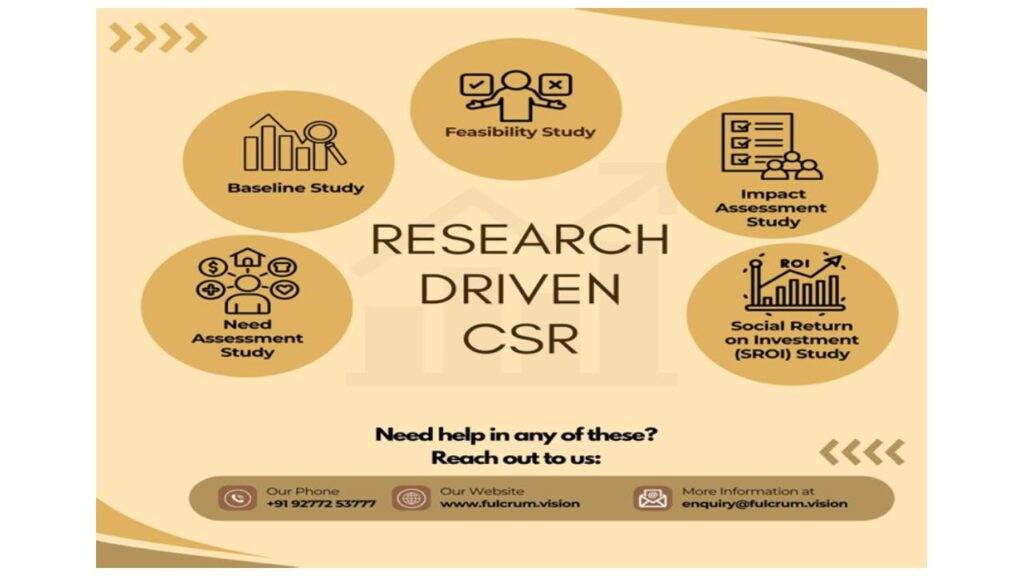
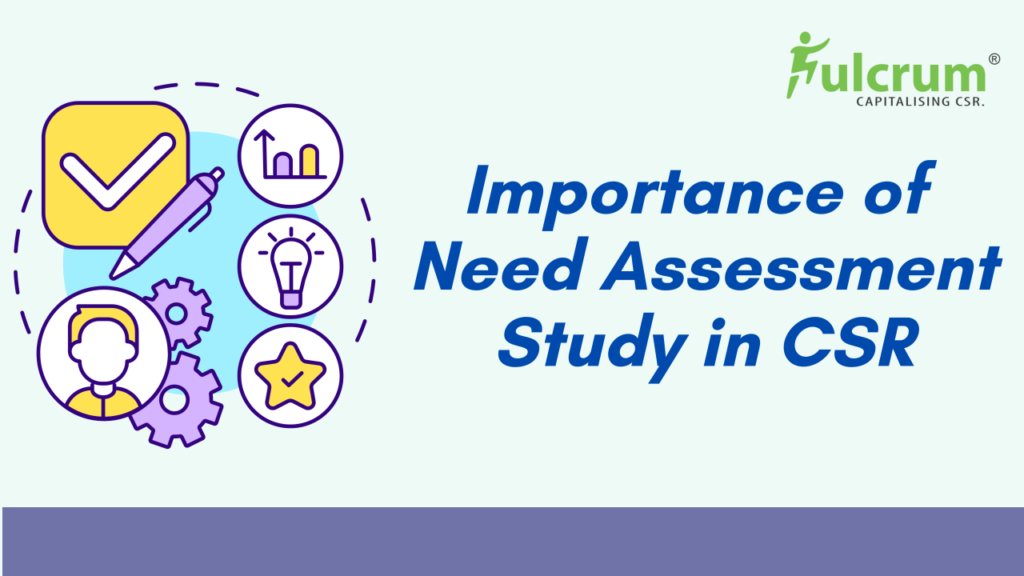
In this evolving landscape, CSR cannot function in isolation or rely on intuition alone. It requires a systematic and evidence-based approach that incorporates tools such as CSR needs assessment, baseline studies, monitoring and evaluation (M&E), and impact assessment. Among these, the need assessment study serves as the most critical starting point, as it lays the foundation for designing relevant and effective CSR programs.
A CSR needs assessment is a structured process that helps organizations identify the actual needs, challenges, and priorities of a community. Instead of relying on assumptions or top-down decision-making, it emphasizes engaging directly with stakeholders through surveys, interviews, focus group discussions, and field observations. This approach ensures that CSR initiatives are grounded in real-world conditions and address genuine gaps in areas such as education, healthcare, livelihoods, and environmental sustainability.
The absence of a proper needs assessment can lead to poorly designed CSR interventions that fail to create meaningful impact. Organizations may invest resources in initiatives that do not align with community priorities, resulting in low participation, limited outcomes, and reduced sustainability. In contrast, a well-executed needs assessment enables companies to prioritize interventions, allocate resources efficiently, and design programs that are both relevant and scalable.
Following the needs assessment, baseline studies play a complementary role by establishing benchmark data against which progress can be measured. Together, these tools form the backbone of evidence-based CSR strategy, ensuring that decision-making is informed by reliable data. This structured approach enhances the effectiveness of CSR initiatives and allows organizations to track changes over time with greater accuracy.
Moreover, integrating need assessment into CSR planning strengthens stakeholder engagement and community ownership. When communities are involved in identifying their own needs, it fosters trust, transparency, and a sense of shared responsibility. This participatory approach not only improves the acceptance of CSR programs but also contributes to their long-term sustainability. It also enables better collaboration with local governments, NGOs, and implementation partners, creating a more inclusive development ecosystem.
Need assessment also plays a vital role in building robust monitoring and evaluation frameworks. By clearly defining the problem at the outset, organizations can set realistic goals, track progress effectively, and measure outcomes against predefined indicators. This enhances accountability and supports credible CSR reporting and impact measurement, which are increasingly important in today’s compliance-driven environment.
However, as CSR becomes more structured and data-intensive, it also becomes more complex. Many corporates face challenges in managing the entire lifecycle of CSR initiatives—from need assessment and planning to execution and impact evaluation. This raises an important question: has CSR become more effective, or has it simply become more resource-intensive? The answer lies in how organizations approach CSR—whether as a compliance obligation or as a strategic investment.
In conclusion, adopting a need-based approach is essential for transforming CSR into a powerful driver of sustainable development. By placing CSR needs assessment at the core of planning, organizations can ensure that their initiatives are relevant, targeted, and impactful. When combined with baseline research, continuous monitoring, and rigorous impact evaluation, this approach enables companies to create meaningful change, strengthen stakeholder trust, and deliver long-term value for both communities and businesses.
https://www.linkedin.com/feed/update/urn:li:activity:7335899802343198720