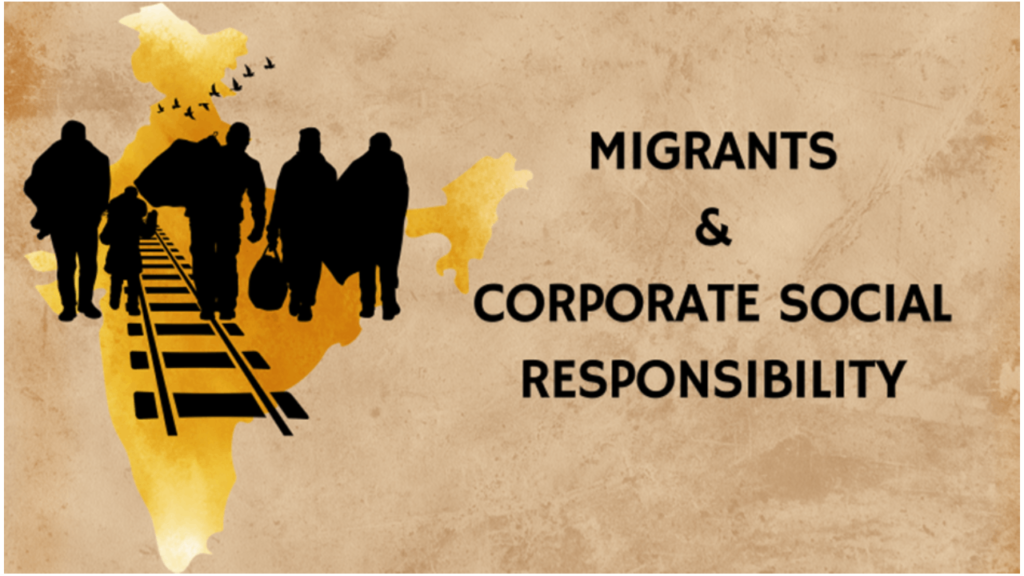
In rural India, countless individuals and families are forced to leave their hometowns seasonally and migrate due to pressing issues like poverty, irregular income, and unstable employment – seeking daily wage work in urban areas or other states.
Once these migrants arrive in the cities, they face multiple challenges viz acceptance from local community, lack of benefit of welfare schemes and access to gainful employment.
The total number of internal migrants in India as per the 2011 census, is 45.36 crore (37%) of the country’s population. This includes interstate and intrastate migrants.
Major Challenges of Marginalised Migrants:
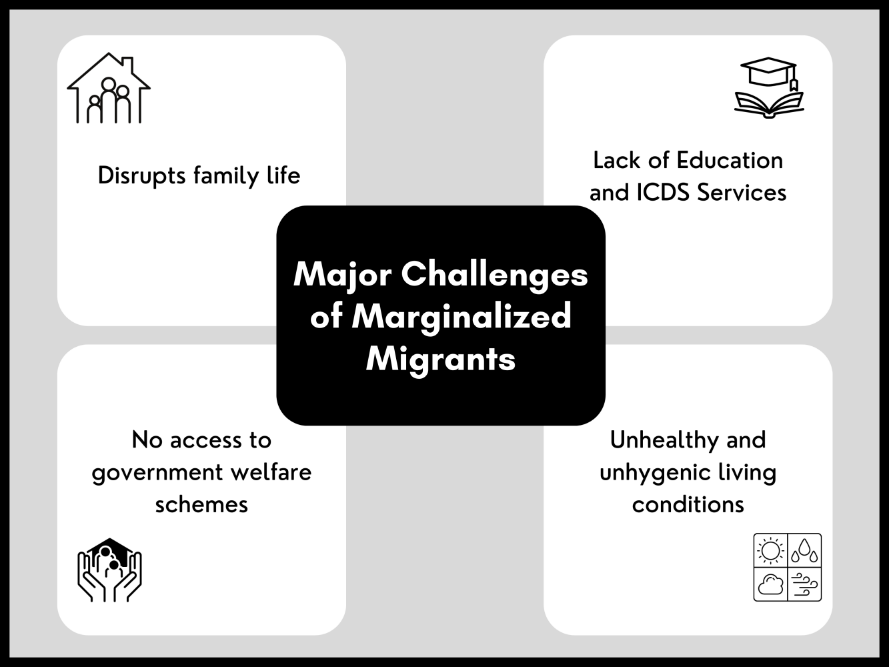
- In some cases, when migrants go for work, elder children have to take care their younger siblings as both parents need to work.
- Political participation, including voting, remains limited for them as the city’s voting list do not have their name.
- Local leaders and Government Employees often lack accurate data on these migrants, making it difficult to assess their needs or provide them with proper support.
- Due to fluidity of their lives, its difficult for migrants to provide proof of address, Voter IDs, Aadhaar cards, etc. which is a pre requisite to enroll various Government schemes.
Points to Ponder upon:
- If the children are staying with their parents at the work location (e.g. construction sites), are they able to benefit from nearby Anganwadis or ICDS programs? Do these children attend school?
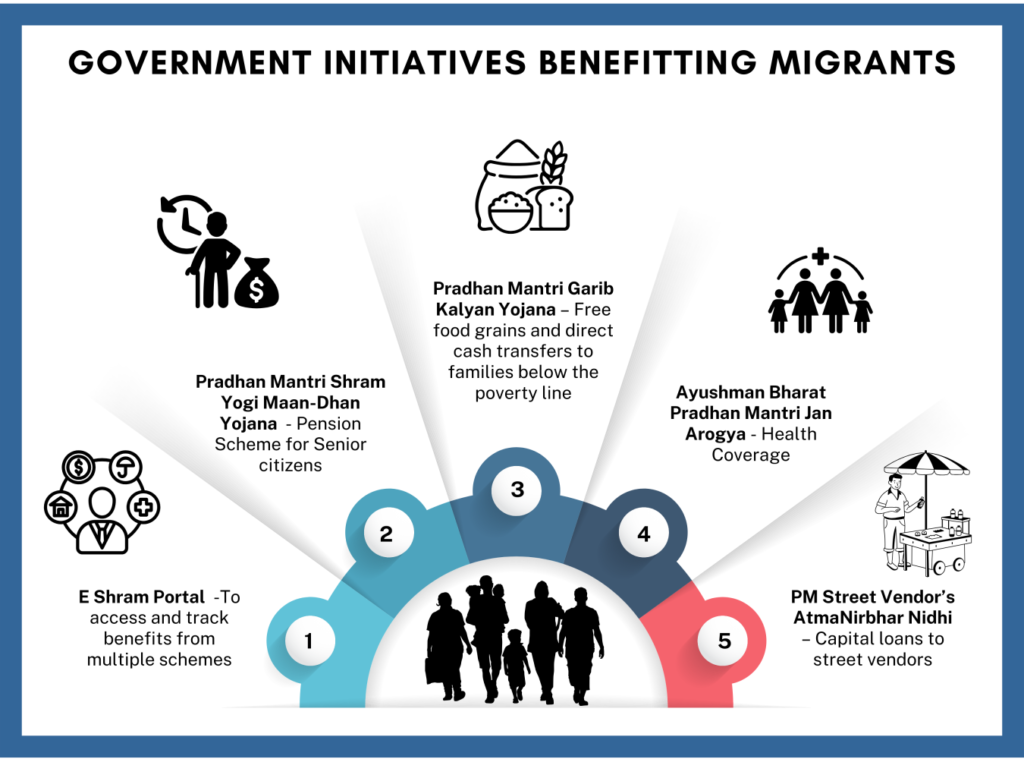
- Even though the One Nation One Ration Card (ONORC) scheme exists, do they receive the benefits of the Ration Card at their migrated location? Are they aware about this??
Can Corporate Social Responsibility (CSR) Be a part of Solution for Migrants?
CSR funding can support migrants by facilitating their enrolment to essential government welfare schemes such as the One Nation One Ration Card (ONORC), Ayushman Bharat – Pradhan Mantri Jan Arogya Yojana, and other such programs.
CSR funders can partner with NGOs and provide:
- Street school
- Mobile Anganwadis
- Mobile Schools at work locations (e.g. construction sites)
- Mobile Health Van
- Late evening vocational courses to upskill their current skills, so the migrants’ earnings can be improved.
https://www.linkedin.com/pulse/addressing-need-marginalised-migrants-india-corporate-dhnuf