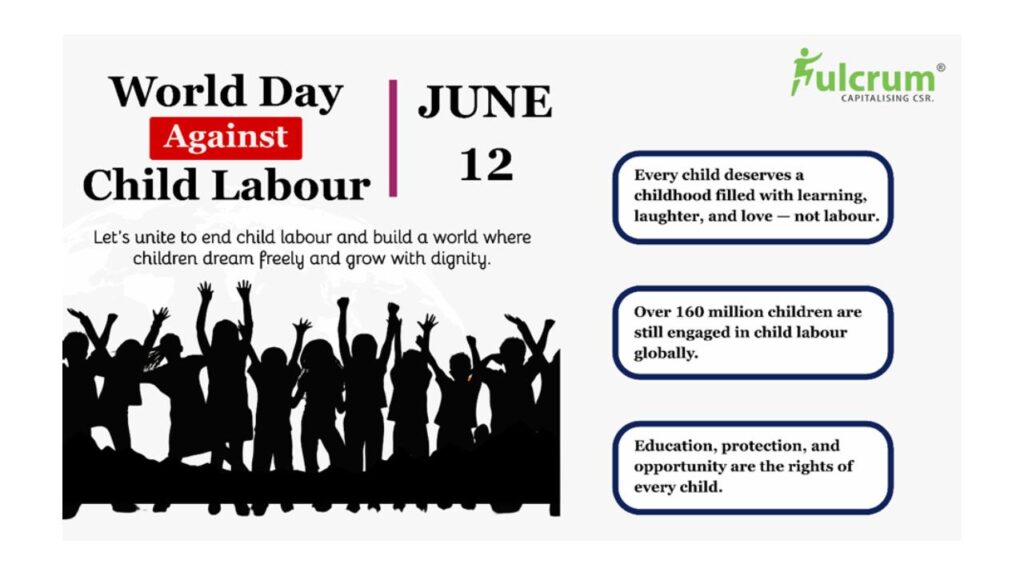
World Day Against Child Labour is observed every year on 12 June to raise awareness about the widespread issue of child labour and to promote collective efforts to eliminate it. The day serves as a global reminder that every child deserves a safe, nurturing childhood filled with education, care, and opportunities—not work that harms their development.
Despite significant progress in many parts of the world, child labour remains a major global challenge. According to international estimates, more than 160 million children worldwide are still engaged in child labour, many of them working in hazardous environments that threaten their health, safety, and future.
Ending child labour requires coordinated action from governments, communities, organizations, and individuals. Awareness, education, and social protection play critical roles in ensuring that children can grow, learn, and thrive without being forced into work at an early age.
Understanding Child Labour
Child labour refers to work that deprives children of their childhood, education, dignity, and potential. It includes activities that are physically, mentally, socially, or morally harmful to children. While helping families with small household tasks is normal in many cultures, child labour becomes a concern when work interferes with a child’s schooling, health, or overall development.
Children involved in labour often work long hours in difficult conditions. Many are employed in agriculture, domestic work, construction, small manufacturing units, roadside businesses, or informal sectors where labour regulations are weak or absent.
Such work prevents children from attending school regularly and limits their opportunities for a better future.
Causes of Child Labour
Child labour is driven by multiple interconnected factors. One of the primary causes is poverty, where families rely on children’s income to meet basic needs. In many rural and economically vulnerable communities, parents may feel they have no option but to send their children to work.
Another important factor is lack of access to quality education. When schools are far away, poorly equipped, or financially inaccessible, children are more likely to drop out and join the workforce.
Social and cultural factors can also contribute to the problem. In some communities, child labour is seen as a normal part of growing up, especially in family occupations or traditional trades.
Additionally, migration, economic instability, and lack of awareness about child rights can further increase the risk of children entering labour at a young age.
The Importance of Education
Education is one of the most powerful tools to eliminate child labour. When children have access to safe and quality education, they are more likely to stay in school and build skills for a brighter future.
Schools provide more than just academic knowledge. They offer a safe environment where children can develop socially, emotionally, and intellectually. Education also helps break the cycle of poverty by opening doors to better employment opportunities in adulthood.
Ensuring that children remain in school is therefore essential for preventing child labour and empowering future generations.
Role of Communities and Organizations
Communities, governments, and organizations all play a crucial role in addressing child labour. Public awareness campaigns can help people understand the long-term consequences of child labour and the importance of protecting children’s rights.
Many non-governmental organizations (NGOs) and community groups work directly with vulnerable families to ensure that children remain in school and receive the support they need. These initiatives may include scholarship programs, after-school learning centers, vocational training for parents, and community awareness programs.
Corporate Social Responsibility (CSR) initiatives can also contribute significantly by supporting education programs, child protection initiatives, and community development projects that reduce the economic pressures leading to child labour.
Building a Future Without Child Labour
The fight against child labour is ultimately about protecting childhood and human dignity. Every child deserves the opportunity to dream, learn, and grow in a safe and supportive environment.
Ending child labour requires a long-term commitment to education, social protection, and economic empowerment of families. When communities work together to support children’s rights, it becomes possible to create a future where no child is forced to work at the cost of their childhood.
On World Day Against Child Labour, individuals, organizations, and governments are encouraged to renew their commitment to ending child labour. By promoting education, strengthening child protection systems, and supporting vulnerable families, society can ensure that children everywhere enjoy a childhood filled with learning, laughter, and hope rather than labour.
A world free from child labour is not only possible—it is necessary for building a more just, inclusive, and sustainable future.
https://www.linkedin.com/feed/update/urn:li:activity:7338785668816355328