Cancer Awareness and Tobacco Prevention: Why Early Awareness in Schools Matters
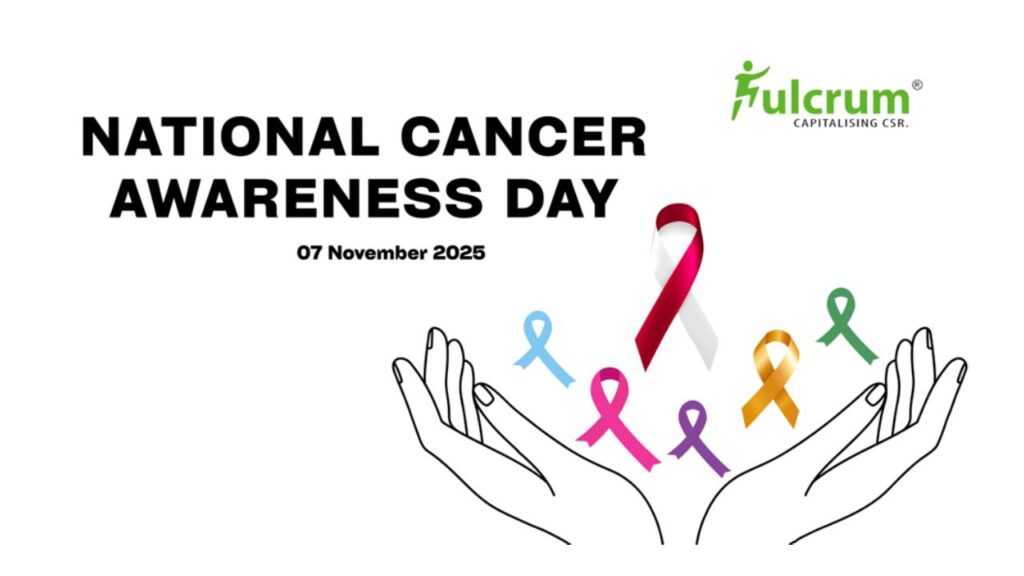
National Cancer Awareness Day, observed every year on 07 November, is an important reminder that preventing cancer is just as crucial as treating it. While significant investments are being made in cancer treatment and medical infrastructure, one of the most powerful tools in the fight against cancer is awareness and prevention, especially among children and adolescents.
Across India, Corporate Social Responsibility (CSR) initiatives are increasingly supporting healthcare infrastructure, patient support programs, and cancer treatment centers. However, field experiences from awareness programs reveal that tobacco prevention at an early age is equally essential if we want to reduce future cancer cases.
A Real Story from the Field
During a project monitoring visit for a Head and Neck Cancer Awareness Program in a government school located in a Tier-2 city, an unexpected incident highlighted the seriousness of the problem.
During the awareness session, the counsellor asked students a simple question:
“Can anyone name some tobacco products?”
Many hands immediately went up. The children began confidently calling out the names of various tobacco products. Their familiarity with these items was surprising.
Then one child suddenly said:
“It’s in the bag of Mr. X, who studies in 4th standard.”
At first, the teachers and facilitators were unsure whether to believe it. But when the teacher checked the bag, several tobacco products actually fell out.
The child was only 9 years old — a student in the fourth standard — and already using tobacco.
Even more surprising was the reaction in the room. The teachers were not particularly shocked, and the classmates appeared unfazed. It seemed as though they had seen similar situations before.
This incident raised several serious questions.
How Do Children Start Using Tobacco?
Many children are exposed to tobacco at a very early age, often unintentionally. In many cases, parents send children to nearby shops to purchase tobacco products such as cigarettes, bidis, or chewing tobacco. Over time, curiosity develops.
What begins as curiosity can quickly turn into experimentation. One try becomes two, and eventually it develops into a habit.
In several communities, children also receive small amounts of pocket money — often ₹5 to ₹10 per day. While the amount may seem insignificant, it is enough to buy low-cost tobacco products that are easily available.
This early exposure creates a pathway to addiction long before children fully understand the consequences.
Why Early Prevention Is Critical
Research shows that tobacco addiction often begins at a young age. According to studies referenced by global public health experts, if individuals do not start smoking before the age of 18, the chances of them becoming smokers drop significantly.
Dr. C. Everett Koop, former U.S. Surgeon General, once noted:
“If a person has never smoked by age 18, the odds are three-to-one they never will. By age 24, the odds are twenty-to-one.”
Various studies also indicate that:
- Less than one-third of smokers start after age 18
- Only about 5% begin tobacco use after age 24
These statistics highlight an important reality: tobacco companies depend on young users to replace older smokers. Preventing early initiation can significantly reduce long-term tobacco consumption and related diseases.
The Role of CSR in Cancer Prevention
Many companies are directing CSR funds toward cancer hospitals, medical equipment, and patient treatment support. While these investments are critical, prevention initiatives can create an even larger long-term impact.
CSR programs can play a key role by supporting:
- School-based awareness programs
- Tobacco prevention campaigns
- Health education sessions for adolescents
- Community awareness initiatives
- Counselling programs for youth
When children understand why tobacco is harmful, they are more likely to make informed choices and avoid addiction.
Awareness Today Prevents Disease Tomorrow
The story of the 9-year-old child is not an isolated case. Across India, thousands of children are being exposed to tobacco at an early age. Many of them silently begin experimenting long before parents or teachers notice.
If awareness programs do not reach schools early, society may unintentionally be preparing the next generation of cancer patients.
Cancer prevention does not begin in hospitals — it begins in classrooms, communities, and homes.
On National Cancer Awareness Day, organizations, schools, communities, and CSR initiatives must work together to strengthen preventive awareness among children.
Because every child who chooses not to start using tobacco represents a healthier future — not just for themselves, but for society as a whole.
Early awareness today can prevent countless cancer cases tomorrow.
https://www.linkedin.com/feed/update/urn:li:activity:7392445553818902528