Corporate Social Responsibility (CSR) in India has evolved into one of the most structured and impactful social investment mechanisms in the world. Over the past decade, CSR has transitioned from voluntary philanthropy to a legally mandated framework that drives sustainable development and inclusive growth. The Bharat CSR Performance Report FY 2023–24 highlights major trends, investments, and sectoral priorities shaping India’s CSR ecosystem.
This report provides valuable insights into how corporate India is contributing toward national development goals while supporting education, healthcare, environmental sustainability, and livelihood generation across the country.
India’s CSR Growth: A Decade of Impact
Since the implementation of CSR provisions under the Companies Act, 2013, India has witnessed consistent growth in corporate social investments. Companies meeting certain financial thresholds are required to spend at least 2% of their average net profits on CSR activities.
Over the last ten years, CSR spending in India has grown significantly. Between FY 2014–15 and FY 2023–24, corporates collectively invested ₹2.21 lakh crore in CSR initiatives, demonstrating a strong commitment toward addressing social and environmental challenges.
In FY 2023–24 alone, CSR spending reached ₹34,909 crore, reflecting a 13% increase compared to the previous year. Additionally, more than 800 new companies entered the CSR ecosystem, further strengthening the scale and reach of corporate-led development initiatives.
This upward trend indicates that CSR in India is no longer just about regulatory compliance; it has become a strategic tool for companies to create sustainable social impact.
Scale of CSR Activities Across India
CSR initiatives are being implemented across a wide spectrum of sectors and regions. According to the report, 59,634 CSR projects were implemented across India during FY 2023–24, with an average project investment of approximately ₹58.5 lakh.
More than 27,188 companies contributed to CSR activities, showing a strong participation of the corporate sector in addressing national development priorities.
When comparing corporate types, non-public sector companies dominate the CSR ecosystem, contributing nearly 87% of the total CSR expenditure, while public sector undertakings account for around 13%.
This distribution highlights the increasing involvement of private sector companies in creating meaningful social and environmental outcomes.
Top Corporate Contributors to CSR in India
The CSR ecosystem is significantly influenced by a few large corporations that contribute a major share of the total spending.
In FY 2023–24, the top 10 companies accounted for 17% of the total CSR expenditure, collectively investing ₹5,857 crore in social initiatives.
Among them, HDFC Bank emerged as the largest CSR contributor, spending ₹922 crore, followed by Reliance Industries Limited with ₹899 crore and Tata Consultancy Services with ₹813 crore.
Other major CSR contributors include:
- ONGC
- Tata Steel
- Infosys
- Indian Oil Corporation
- Reliance Jio
- ITC Limited
- ICICI Bank
The combined CSR investment by the top 50 companies reached ₹11,600 crore, representing nearly one-third of India’s total CSR spending.
These organizations play a vital role in funding large-scale social programs that impact millions of beneficiaries across India.
Key CSR Focus Areas in India
CSR spending in India is strongly aligned with national development priorities and the United Nations Sustainable Development Goals (SDGs).
The report identifies five major thematic areas that receive the majority of CSR funding.
1. Education – The Largest CSR Priority
Education continues to dominate CSR spending in India. In FY 2023–24, corporates invested ₹12,135 crore in education initiatives, accounting for 35% of the total CSR expenditure.
CSR-funded education programs support initiatives such as school infrastructure development, digital learning platforms, scholarships, and skill training.
2. Healthcare and Well-being
Healthcare received the second-highest CSR investment, with ₹7,151 crore spent in FY 2023–24, representing 20% of total CSR spending.
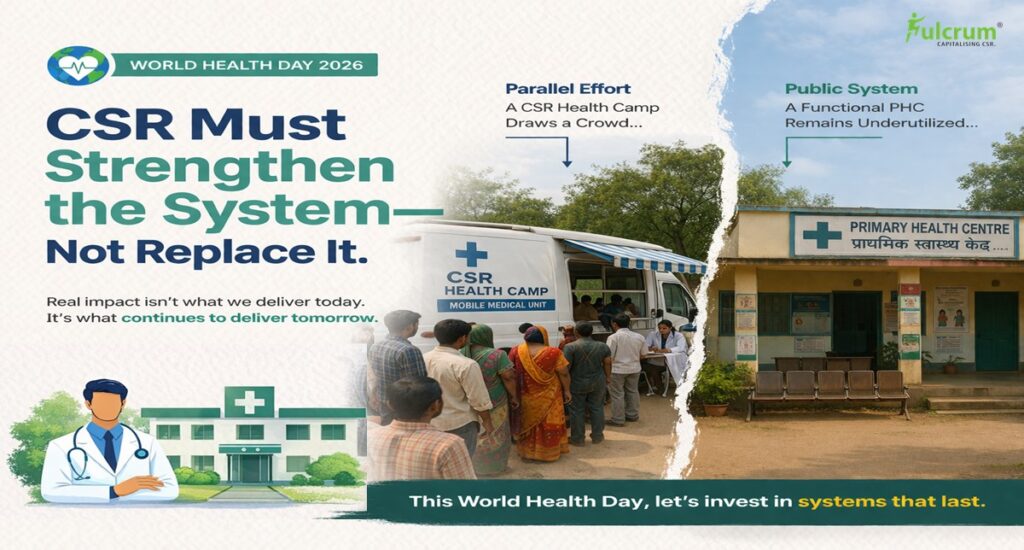
Corporate healthcare initiatives include hospital infrastructure, mobile health units, maternal and child health programs, and disease prevention campaigns.
3. Environmental Sustainability
CSR investments in environmental sustainability reached ₹2,430 crore, highlighting increasing corporate focus on climate action, renewable energy, afforestation, and biodiversity conservation.
4. Rural Development
Rural development initiatives received ₹2,408 crore in CSR funding, focusing on infrastructure development, sanitation, drinking water, and community welfare.
5. Livelihood Enhancement
CSR investment in livelihood programs increased significantly, reaching ₹2,360 crore, with a remarkable 38% growth compared to the previous year.
These initiatives support skill development, entrepreneurship, and employment generation.
CSR Investments Across Indian States
CSR investments are distributed across multiple states depending on corporate presence and development priorities.
The report highlights the top states receiving CSR funding in FY 2023–24:
- Maharashtra – ₹6,066 crore
- Gujarat – ₹2,708 crore
- Karnataka – ₹2,255 crore
- Tamil Nadu – ₹1,969 crore
- Delhi – ₹1,950 crore
Together, the top 10 states received nearly 61% of the total CSR spending in India, demonstrating a concentration of CSR investments in regions with strong industrial presence and established implementation networks.
However, smaller regions such as Lakshadweep, Mizoram, Tripura, and Andaman & Nicobar Islands receive relatively limited CSR funding due to geographical and logistical challenges.
CSR Supporting India’s Development Vision
CSR initiatives in India are increasingly aligned with government programs and national development missions. Corporate investments are supporting schemes related to:
- Education and digital literacy
- Healthcare access
- Skill development and employment
- Environmental sustainability
- Rural and community development
By complementing public welfare programs, CSR plays a critical role in accelerating India’s progress toward the vision of “Viksit Bharat”.
Conclusion
The Bharat CSR Performance Report FY 2023–24 highlights the growing maturity and scale of India’s CSR ecosystem. With ₹34,909 crore invested in a single year and over ₹2.21 lakh crore spent in the past decade, CSR has become a powerful catalyst for social transformation.
As companies continue to adopt strategic CSR approaches, integrate sustainability goals, and collaborate with government and civil society, the impact of corporate social responsibility in India will continue to expand.
CSR is no longer just a statutory obligation—it is a key driver of inclusive growth, sustainable development, and nation building.
https://www.linkedin.com/feed/update/urn:li:activity:7342859050256084992